Why Was the Sun Pink on July 15, 2026? Atmospheric Optics and Wildfire Smoke Physics




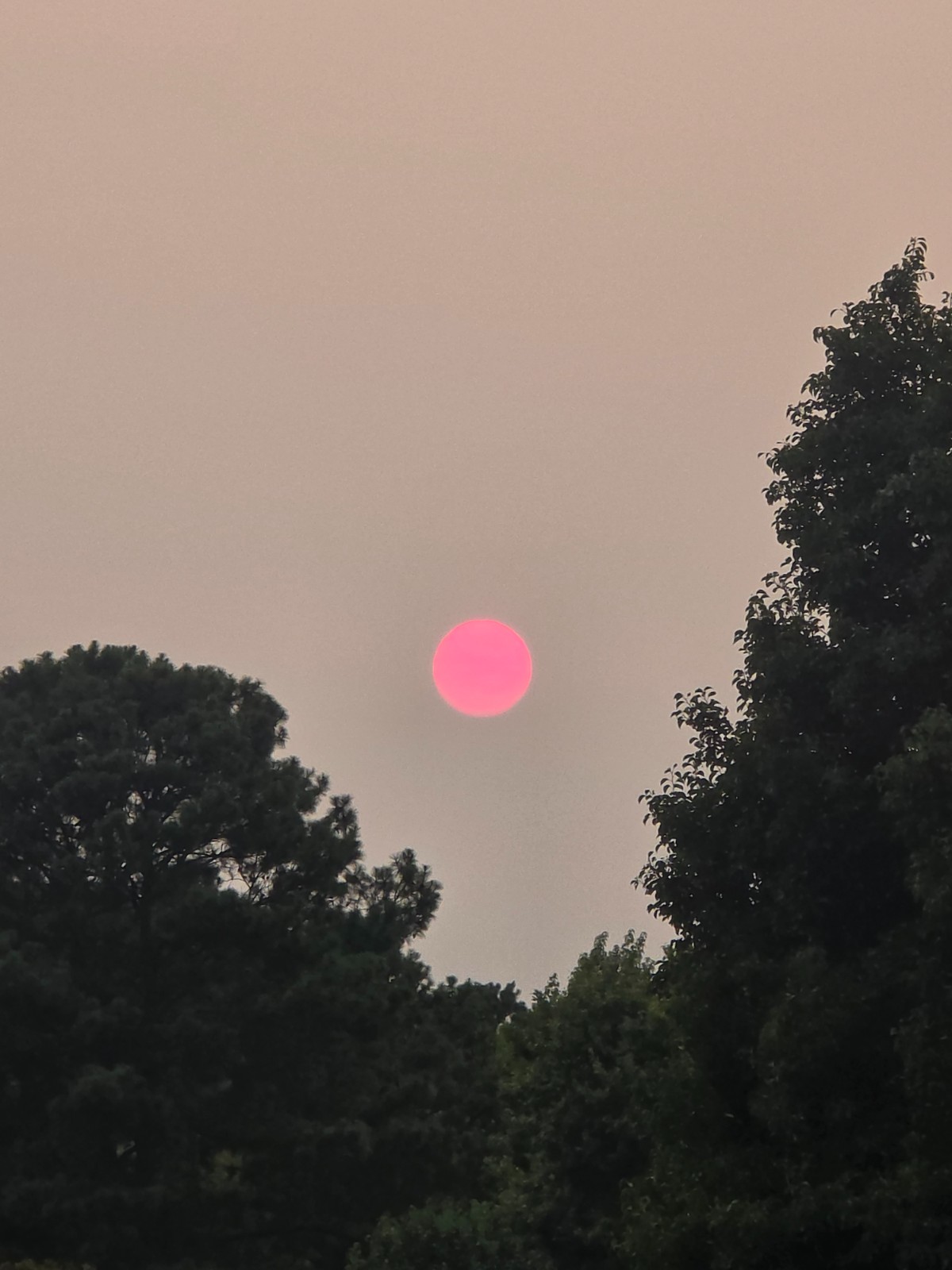
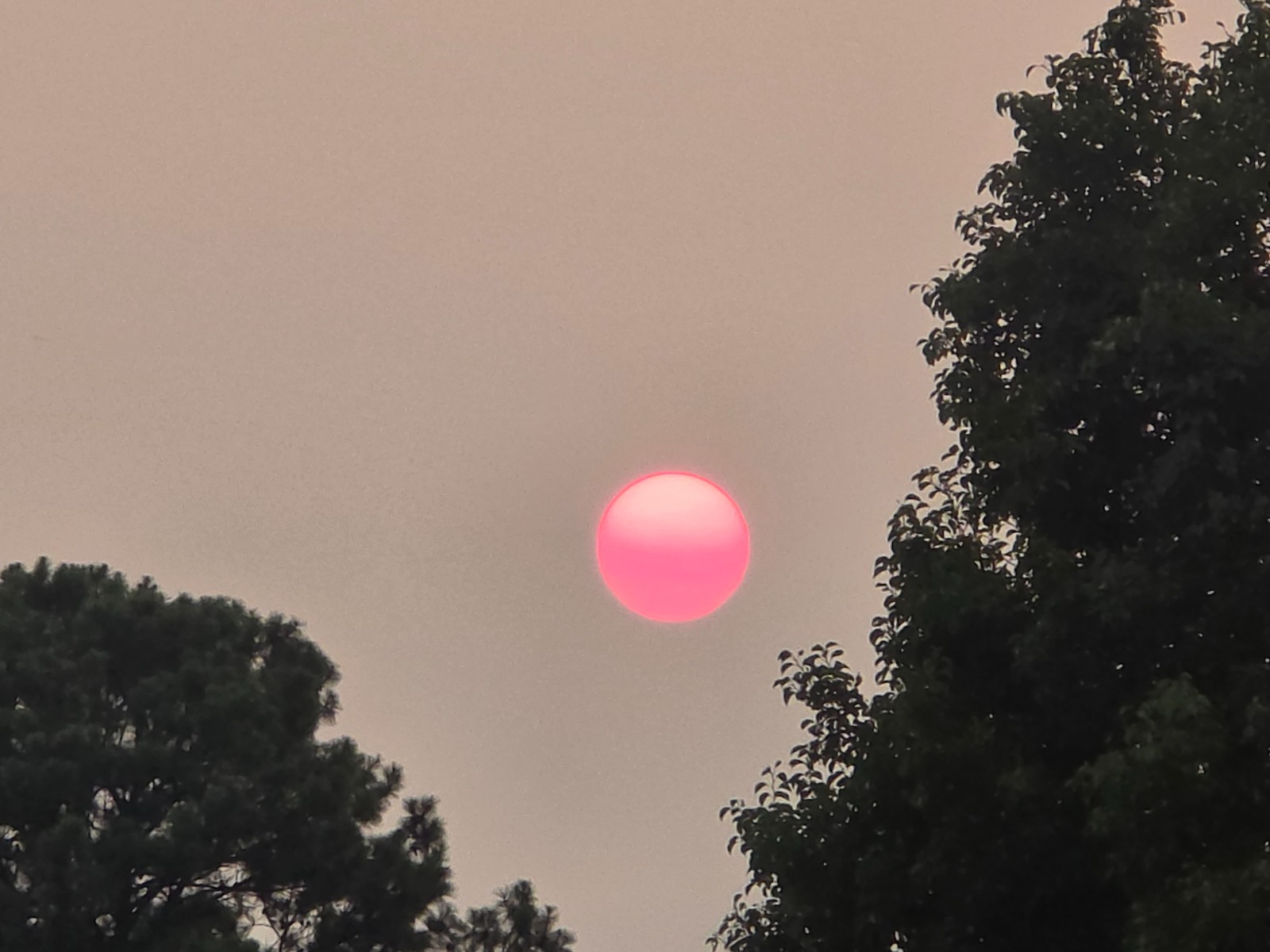

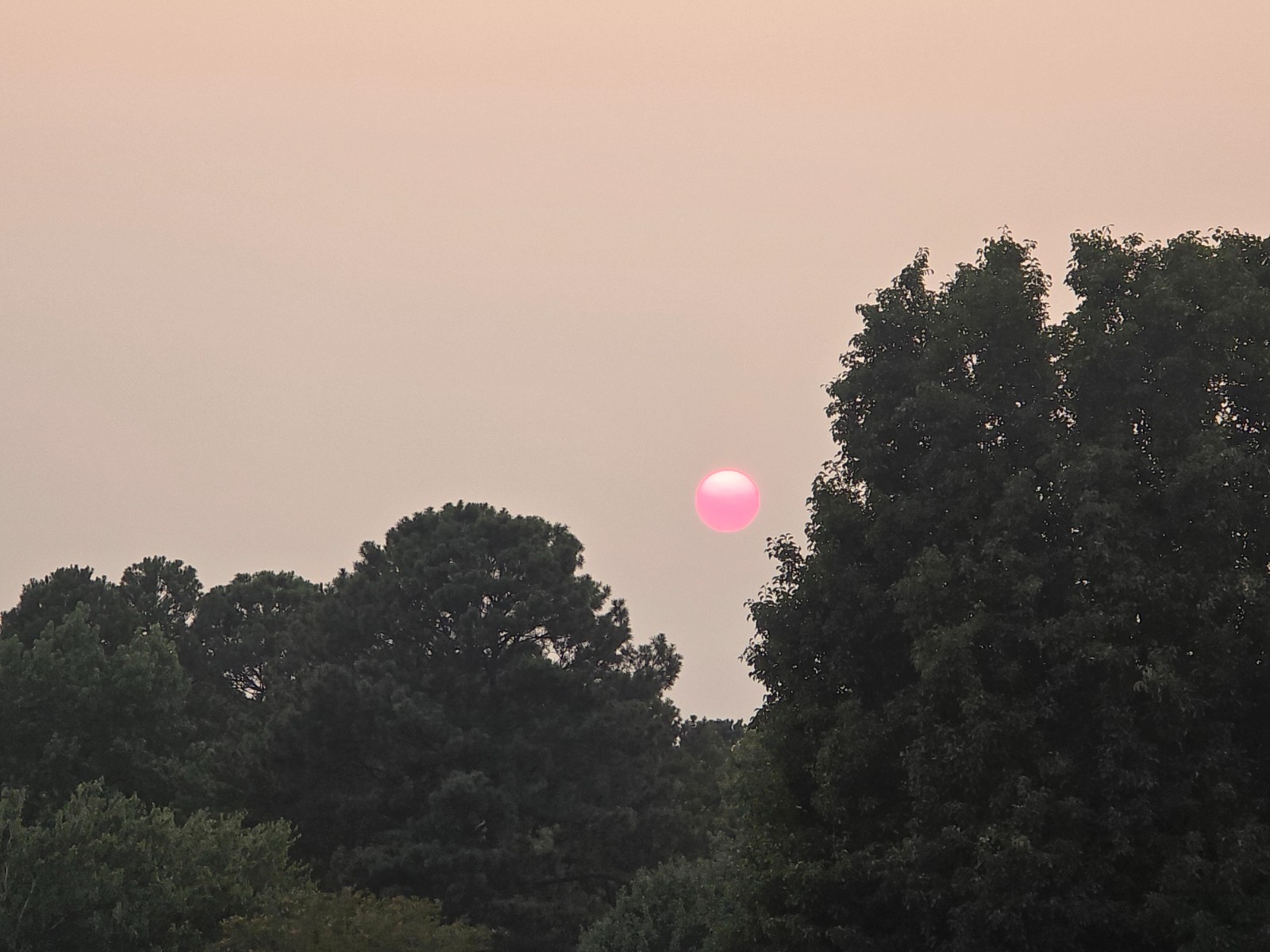
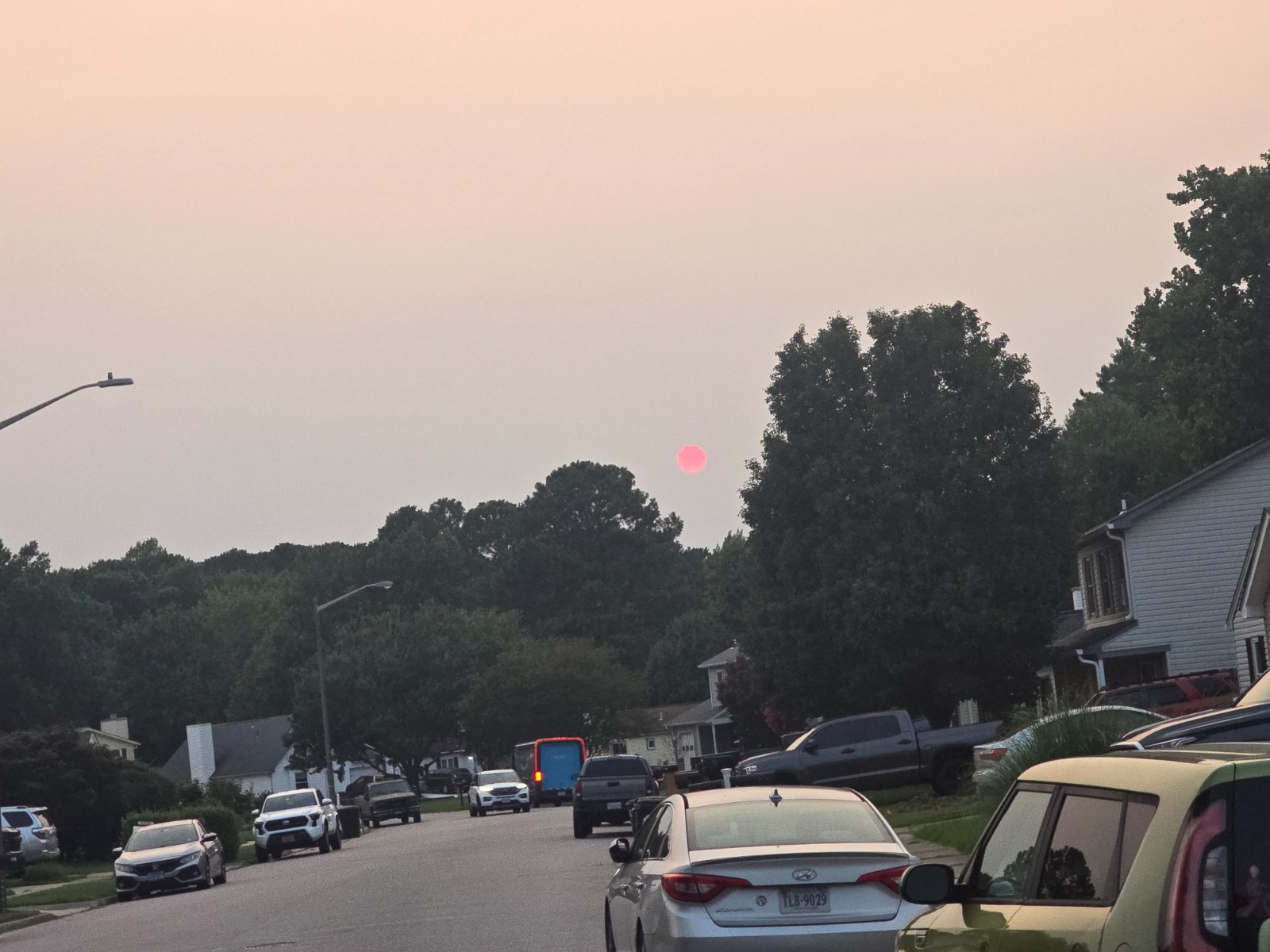
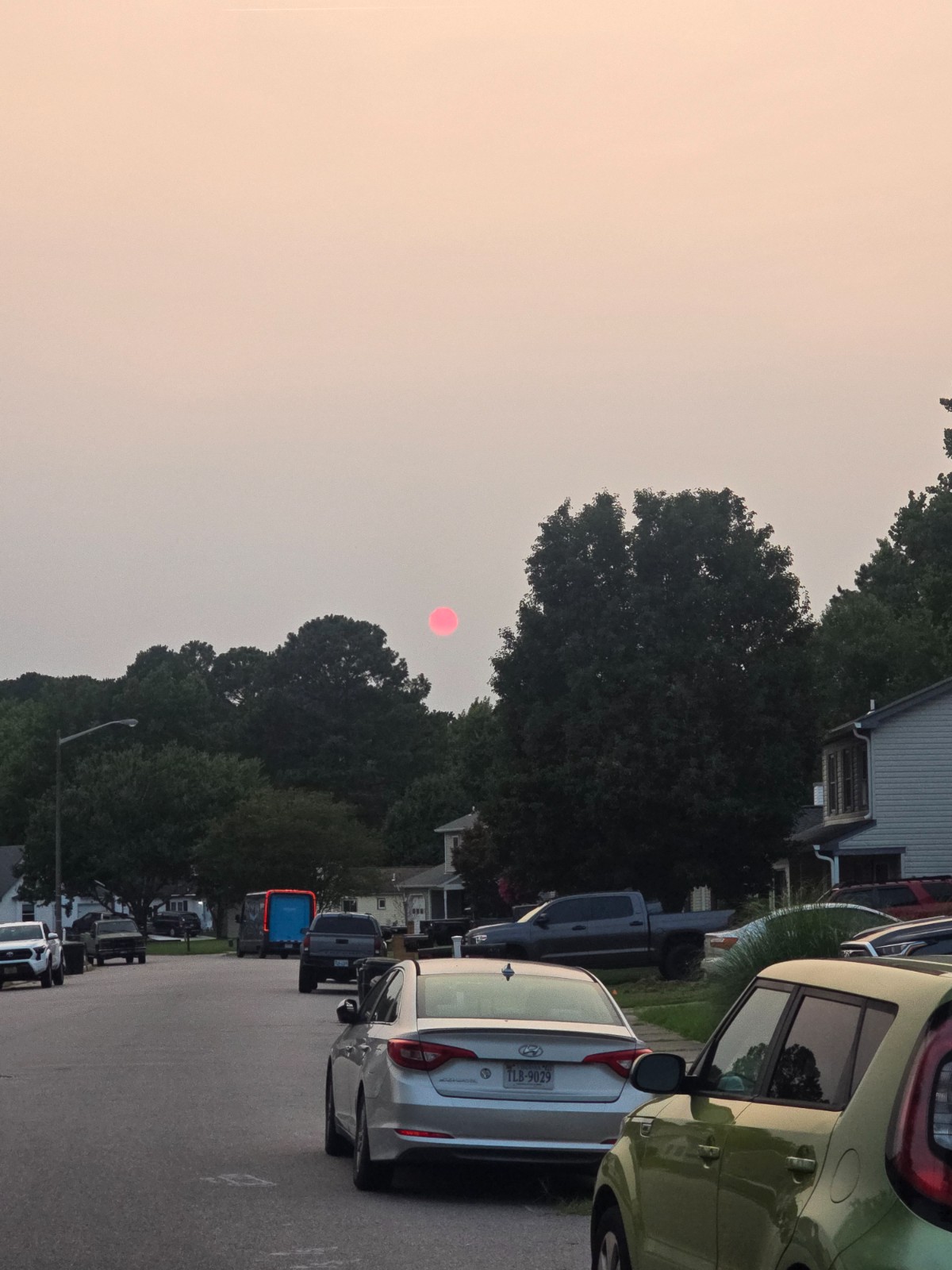
At approximately 7:50 PM EDT on July 15, 2026, an extraordinary solar sight appeared above residential neighborhoods in Virginia.
The sun, usually a brilliant golden disc during warm summer evenings, transformed into a sharp, vibrant neon-pink orb suspended in a pale grey-amber horizon.
This striking visual effect was triggered by high-altitude particulate plumes carrying smoke from hundreds of active wildfires in central and eastern Canada down across the Mid-Atlantic region.
As solar radiation travels through dense atmospheric layers containing fine particulate matter (PM2.5) and organic brown carbon aerosols, short-wavelength light—specifically blue and green light—is scattered away in all directions. Only long-wavelength light toward the far end of the visible spectrum passes directly through the haze.
At high atmospheric altitudes, this severe filtering strips away the sun’s typical glare, allowing the precise edge of the solar disc to appear as a vivid magenta sphere visible even through light tree foliage.
Observing atmospheric physics like this offers a direct window into how global weather systems and aerosol transport connect distant regions. High-altitude atmospheric currents can shift air quality and visual landscapes thousands of miles away within hours.
Submitted by HAKEYM
Hakeem Ali-Bocas Alexander